TelusTV+
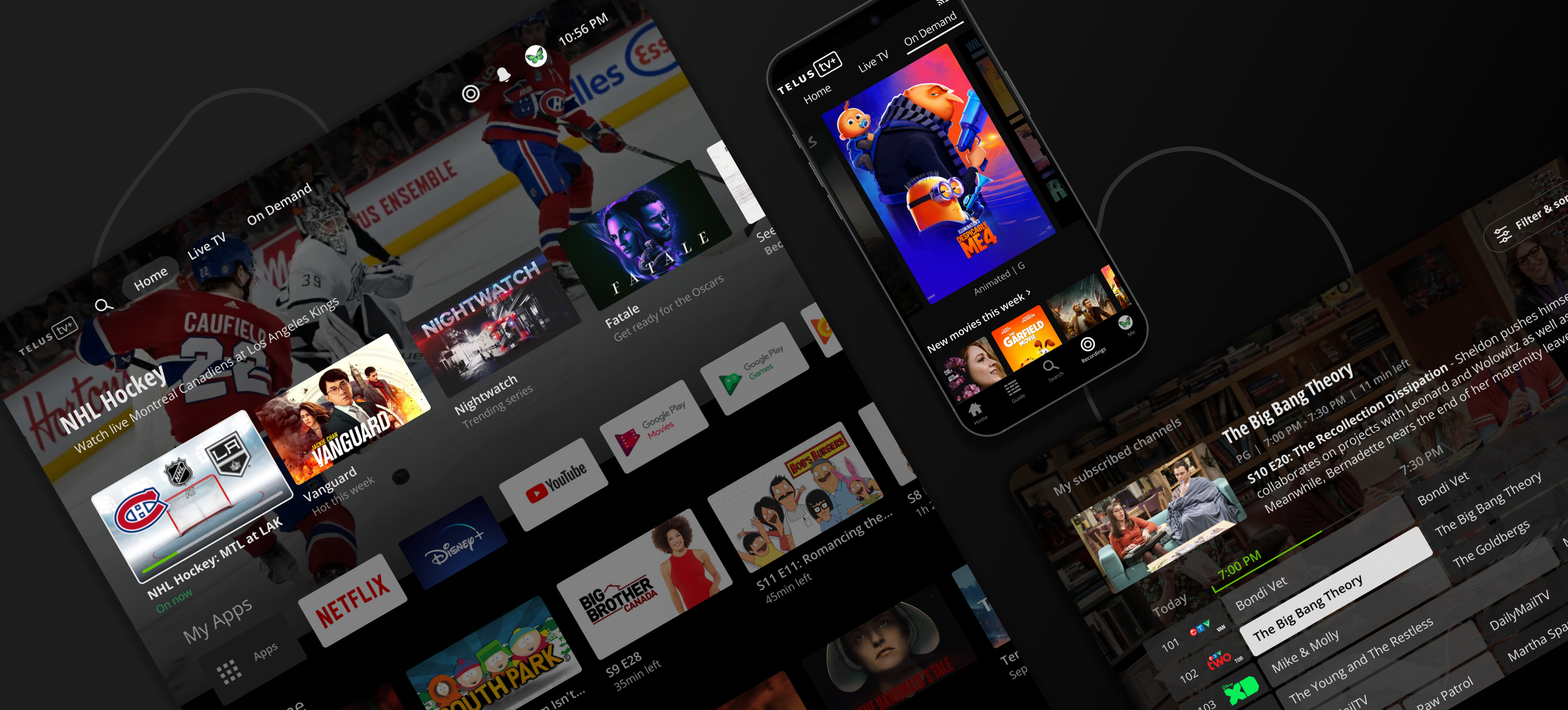
Canada's second-largest streaming service, serving over two million users across TV, mobile, and web.
My role.
Owned UX/UI for the entire Web experience for the Team Recordings feature and defined new foundational patterns for the Mobile and TV (10-foot) experiences. Led DesignOps improvements to accelerate delivery while mentoring new designers joining the team.
Impact.
On the product side, the Team Recording feature is expected to greatly increase the use of Recordings, as observed on test users.
On a project level, I not only performed as a product designer but lead efforts to reduce handoff and documentation time, while also being a leader and a reference to the team.
The problem.

TelusTV+ serves a predominantly older and non-tech-savvy audience transitioning from traditional television to digital platforms. Their usage behavior is heavily tied to simplicity and familiarity. These were the users who wanted to automatically record every game from their favorite teams, but the current product required setting recordings one by one.
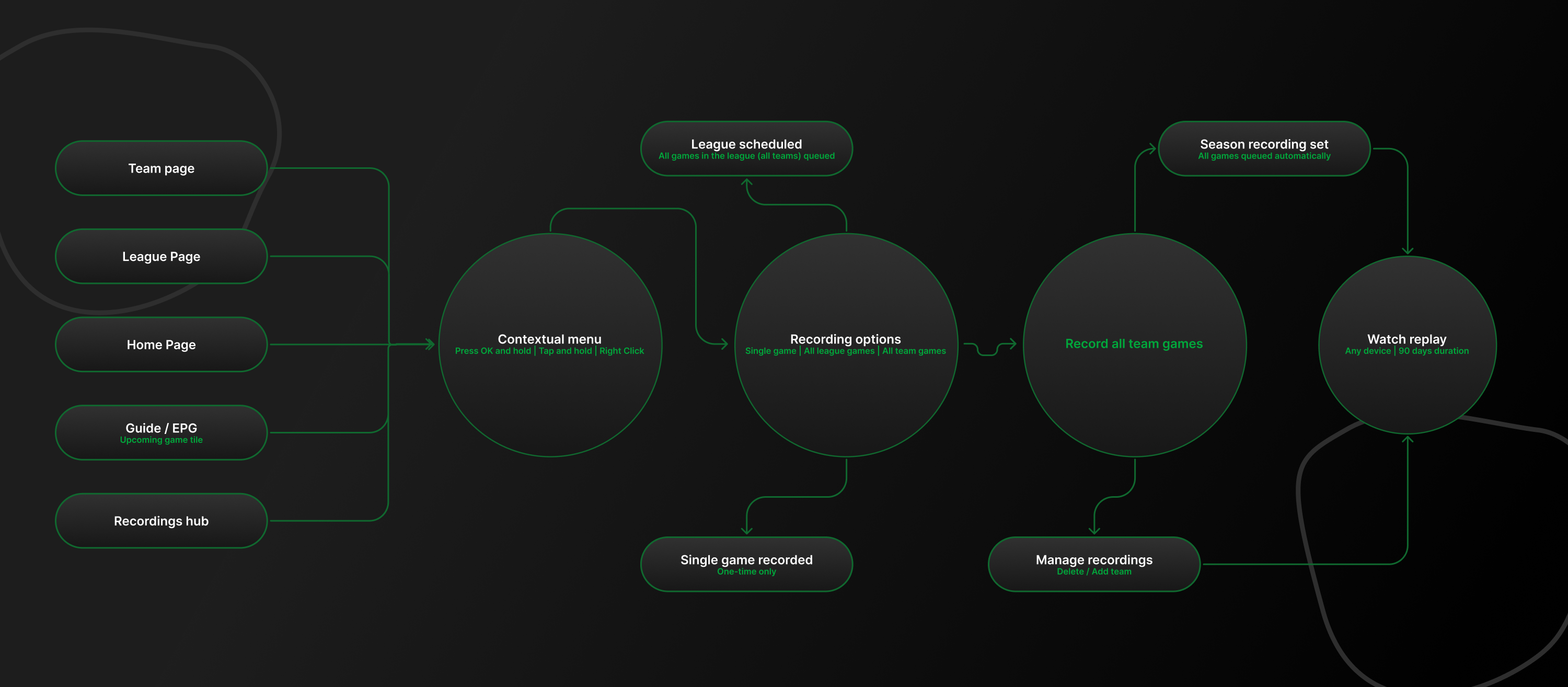
Our goal was to reduce a multi-step, multi-platform process into one simple action:
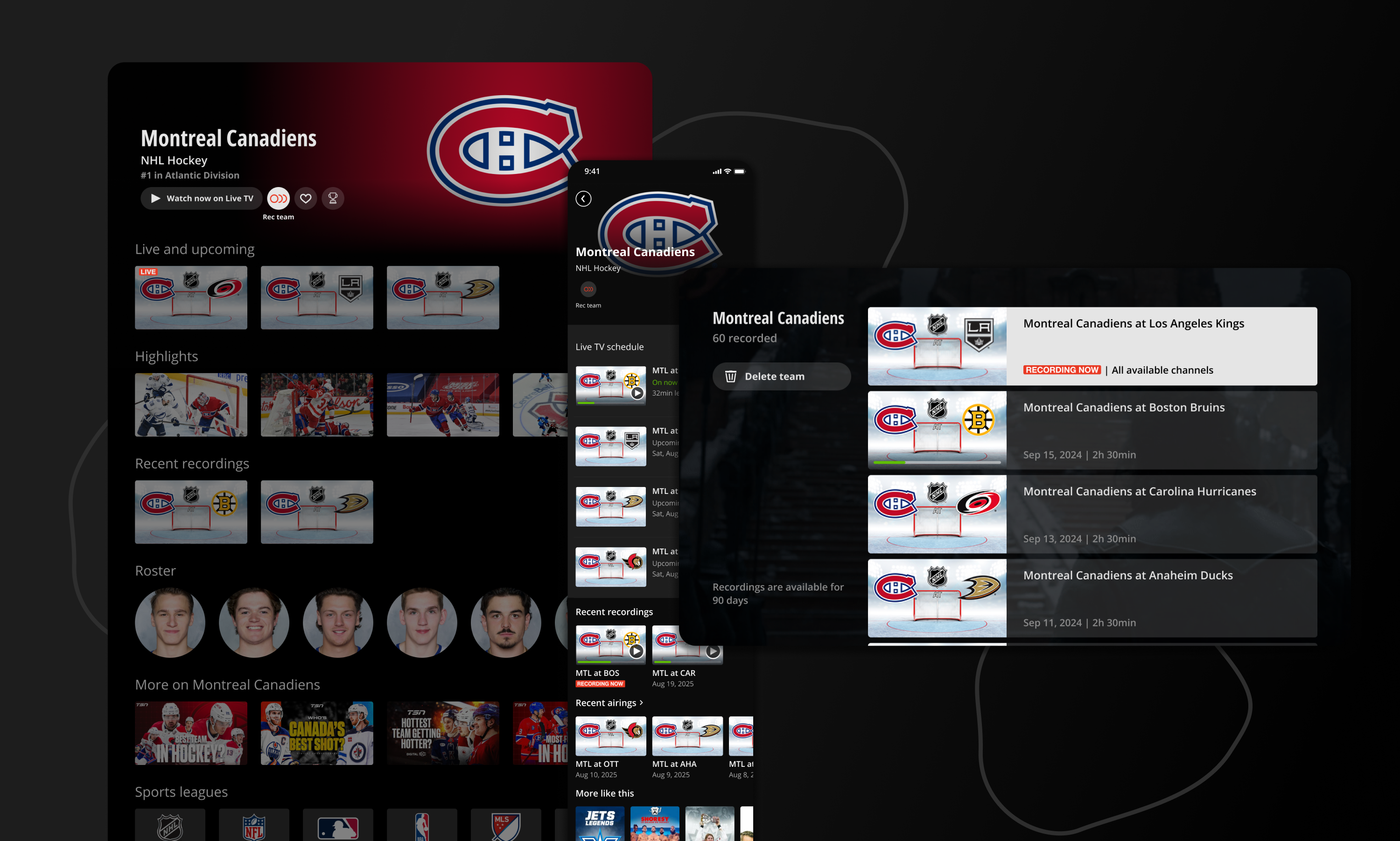
Select team → record every game this season.
The solution.
A feature that lets users simply select favorite teams — NHL, NFL, NBA — and automatically record all games for the entire season, eliminating individual recording setup.
The challenge: introduce modern, powerful digital features while ensuring the experience remained intuitive, non-intimidating, and consistent with the familiar logic of traditional TV.
Design method.

With this simple approach I worked on benchmarking streaming competitors, identifying mental models of TV users, while digging deep into the data we had about our own users.
With the data I was able to map user journeys and identify that, if this project were to succeed, the Design Systems had to be realigned and updated first — this took more time, but proved to be very efficient in the near future, when ideation and documentation came to be much easier, saving development time and money.
Documentation and delivery were a key aspect of the project, because aligning with the development team was imperative in updating legacy technology and design patterns.
The complexity of the "record all future games for a team" concept needed to be translated into a simple, single-action flow for our target audience. My design work focused on discoverability and ease of use: the feature should be visible and understandable without cluttering the familiar TV-like interface, and the user journey should be as simple as possible.
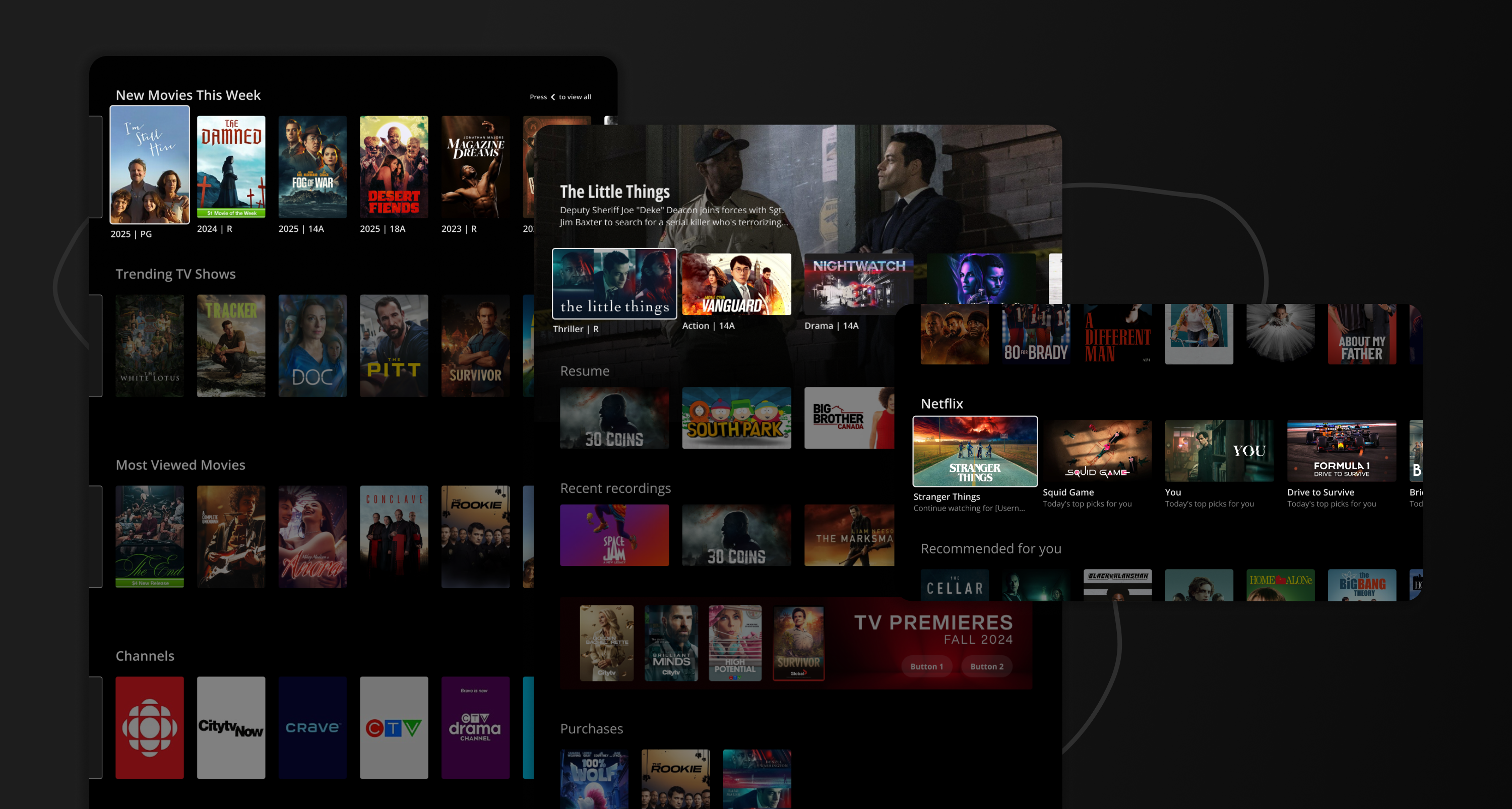
While I joined the team after the initial steps of the feature were defined, I led the efforts in setting the design standards that would be implemented across all devices, with a scalable UX pattern for Team Recording that felt natural whether using a remote control (TV), touch gestures (Mobile), or a mouse/keyboard (Web).
Contextual menu.
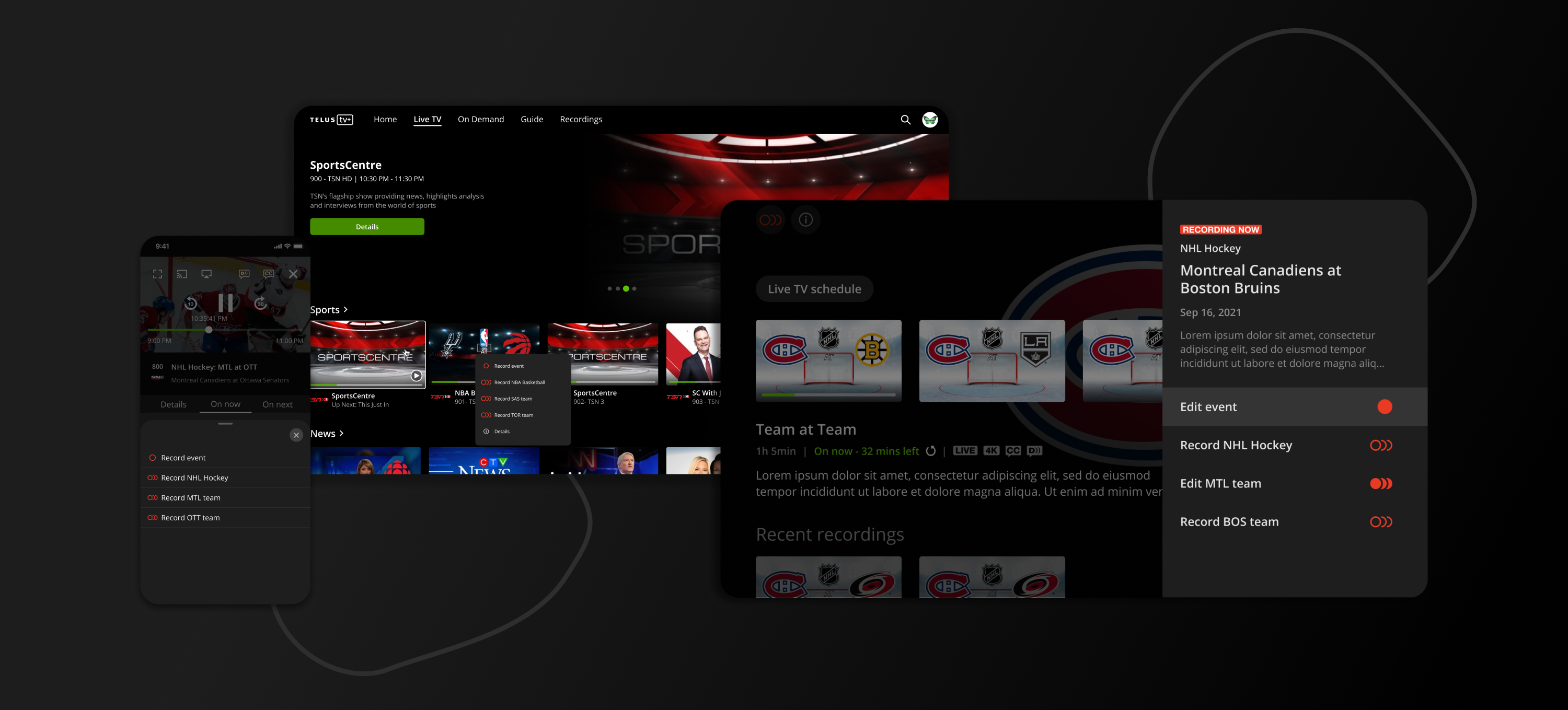
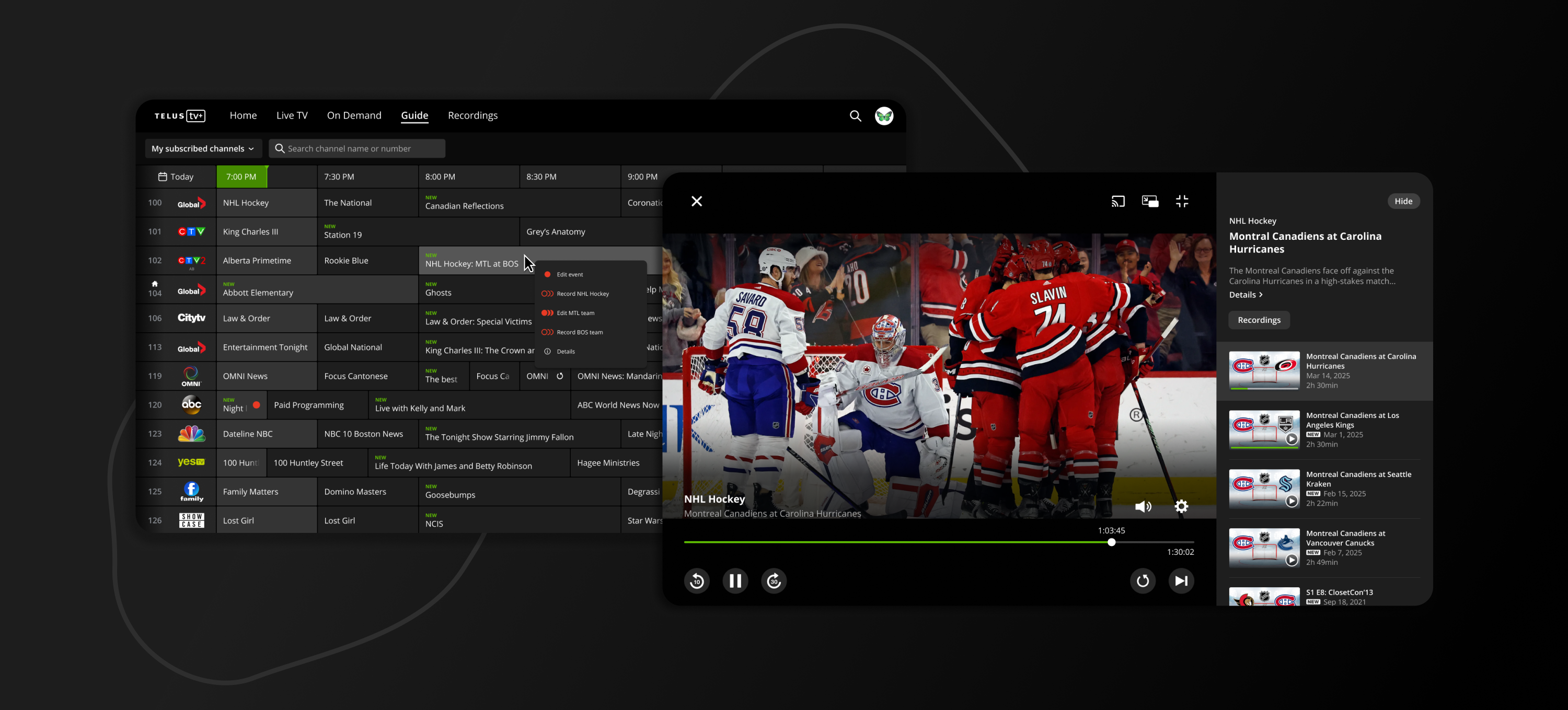
One of my design mantras is to focus on consistency, and I get to every project with this in mind. That is why one of my biggest contributions to TelusTV+ was designing a contextual action menu that made recording accessible from anywhere in the app.
This reduced interaction cost from 4–6 steps to 1 action, while also allowing for a similarly simple interaction to play all the different broadcasts for a high-stakes match.
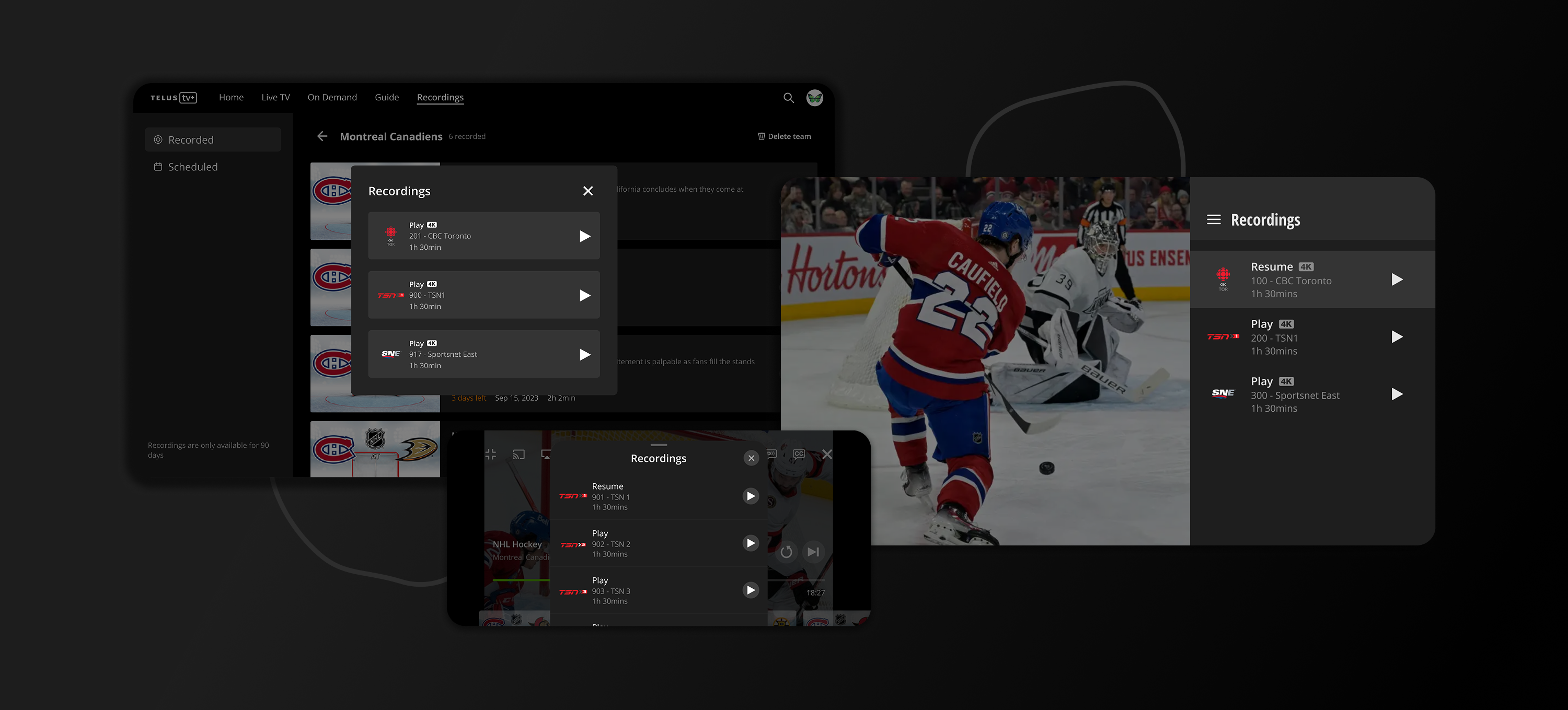
This contextual menu proved to be very challenging to implement, as it would work very differently and have varying entry points across all the devices: press and hold the Record button on TV; tap and hold on mobile; and right-click on browser.
To ensure a consistent experience, I designed every possible interaction, in every device, and wrote extensive documentation to ensure the development team could do their best work. With the help of QA, all the edge cases were thought out and addressed: no stone was left unturned.
Press and hold on TV. Tap and hold on mobile. Right-click on browser.
One menu — three inputs
The design systems.
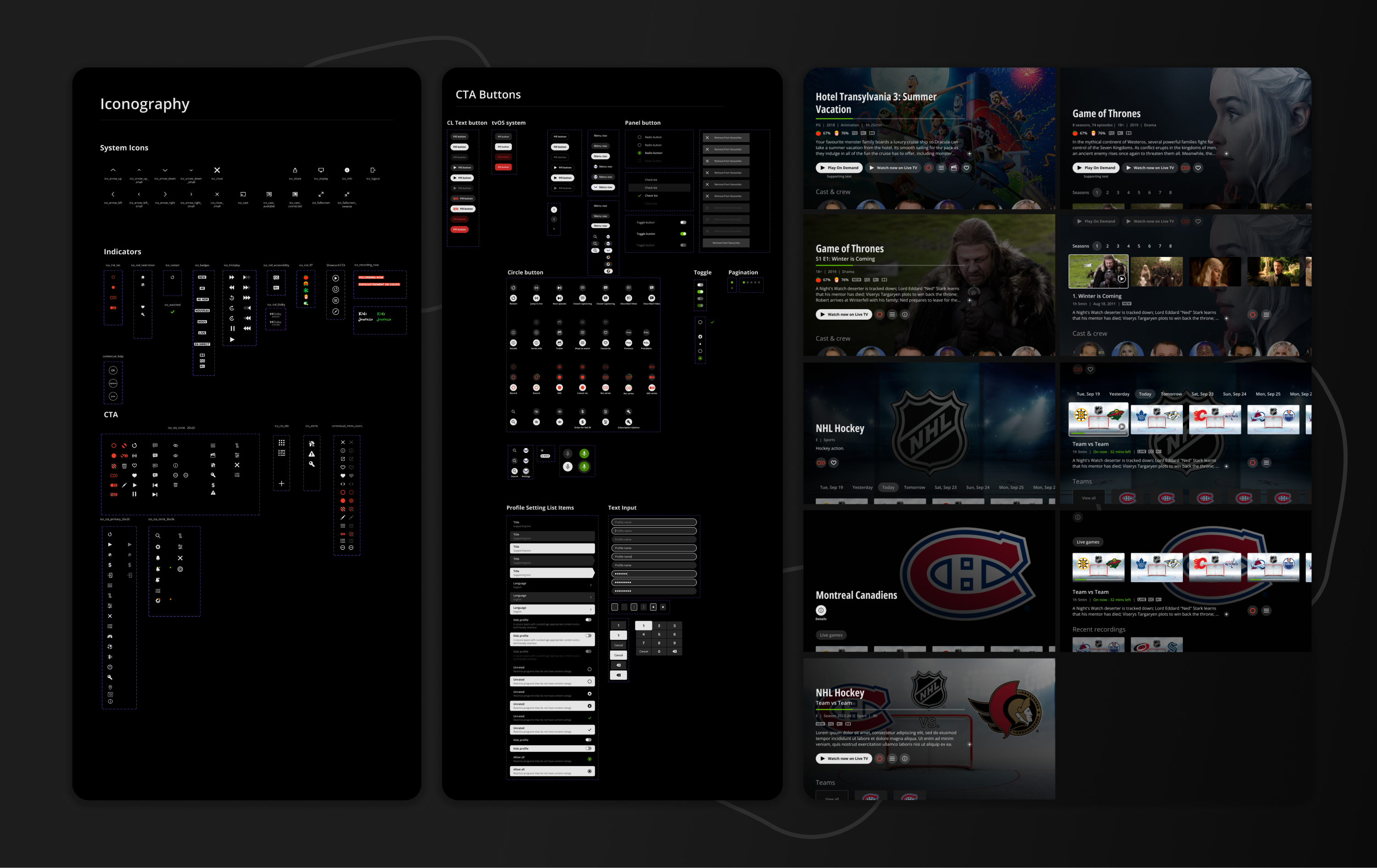
One of the biggest challenges was dealing with legacy technology. Using the data we gathered in research, I led multiple alignment workshops with the development team to use the opportunity to not only implement the new feature, but also improve on the existing UX for the product. That led to great cross-team collaboration finding the main points in which we could better the current product.
To achieve all of this, I revamped all of the Design Systems we had: TV, Mobile and Web. With this effort I standardized interaction patterns, normalized component behavior across platforms and created 100+ fully customizable templates following product and development guidelines.
This directly resulted in 210% faster task completion and smoother design handoffs to development.
Documentation.
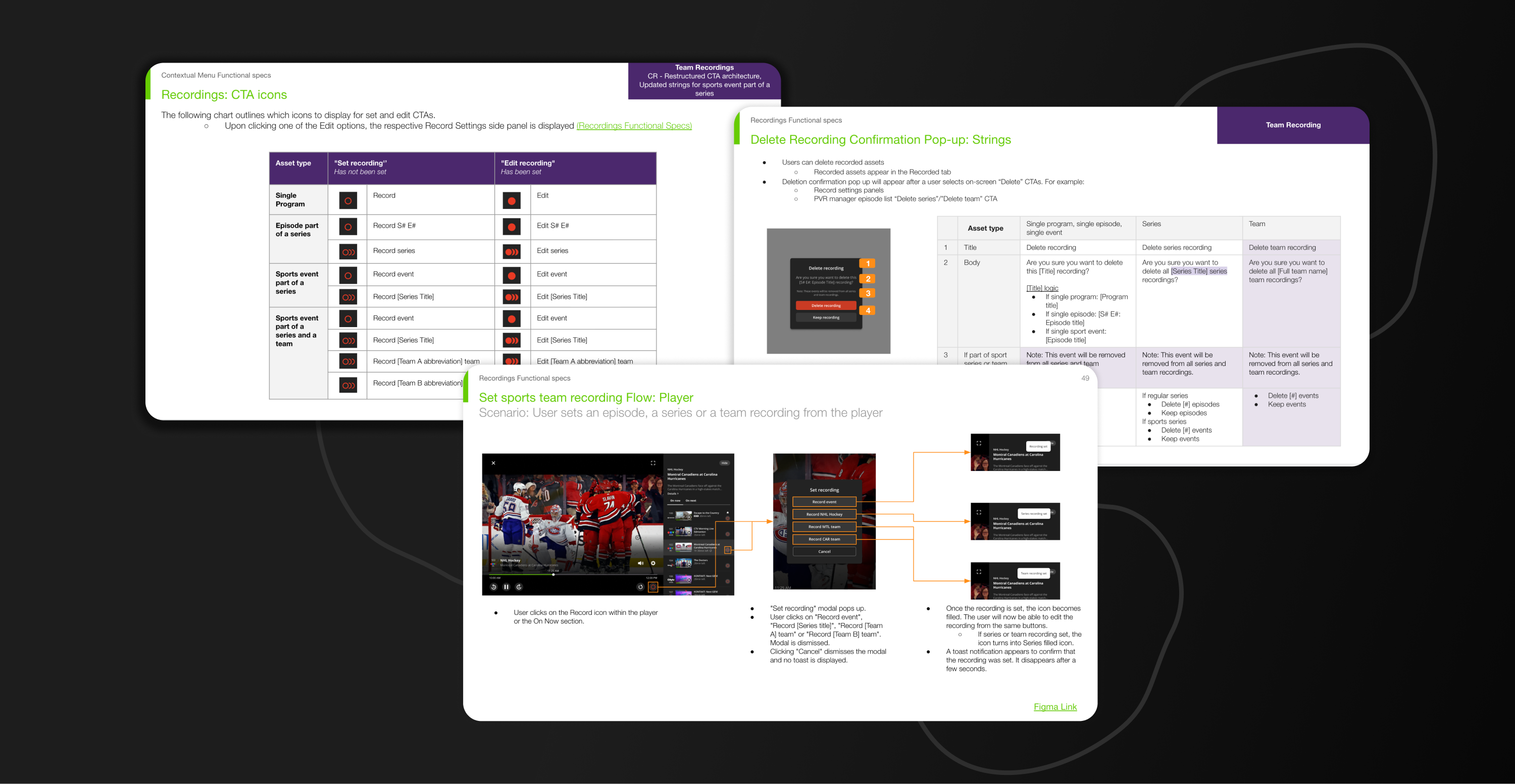
While the technology and the design practices were now moving forward, a great portion of the documentation the company had was also very outdated. A significant portion of my focus, beyond product delivery, was on establishing design rigor to ensure long-term success and team efficiency.
I created heavy and detailed documentation for the feature, clearly articulating interaction models, edge cases, and accessibility considerations. This rigorous approach was vital for a smooth developer handoff across the three distinct platforms (TV, Mobile, Web) and ensuring product consistency.
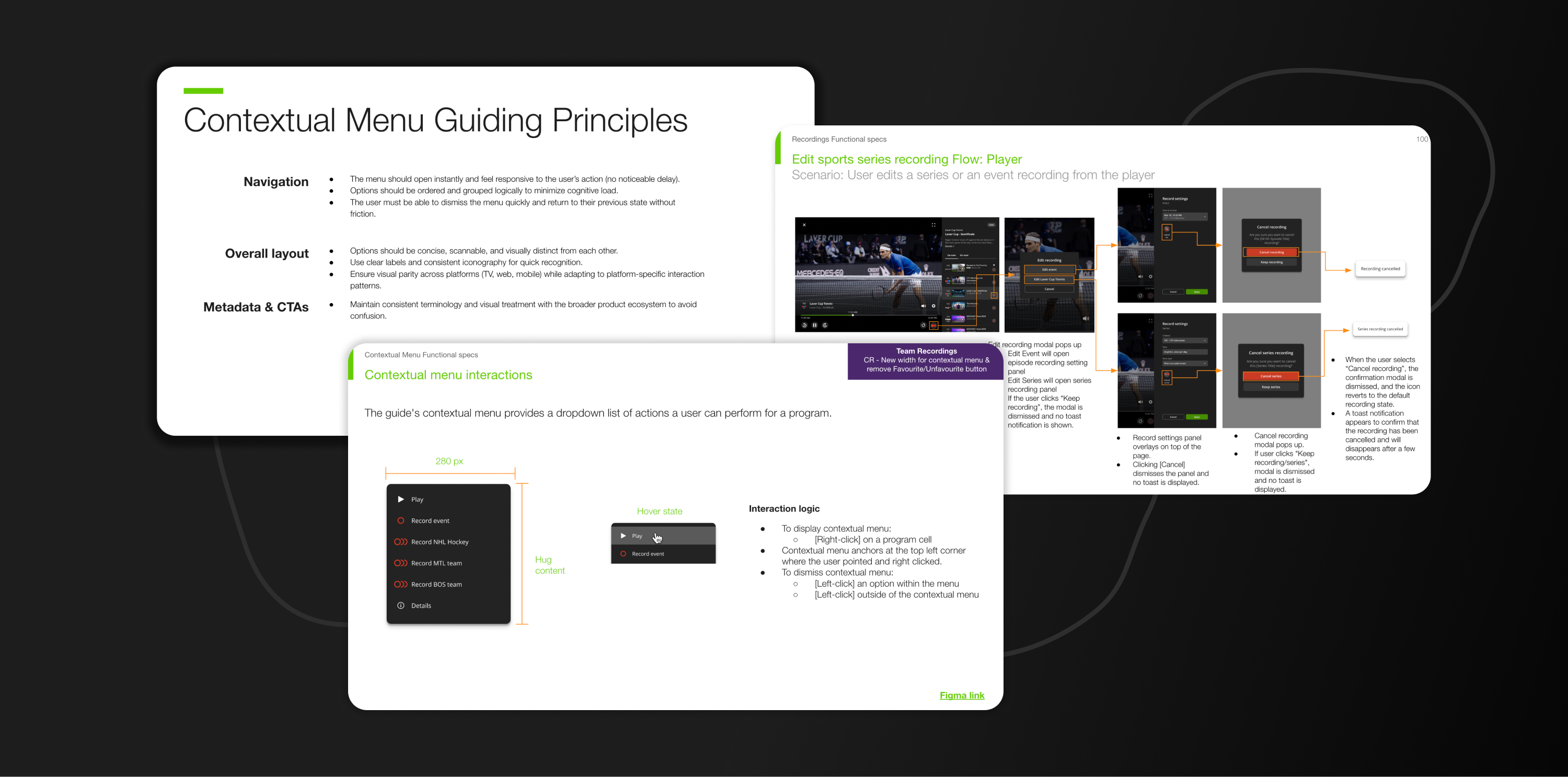
My approach to writing documentation was to start every document with a systematic approach, ensuring the document disclosed the project's "bigger picture", before getting into the flows and smaller details. This way the development team had a consistent source of truth for design decisions, and the document could refer to previous pages and avoid having too many pages with similar content.
Engineers praised this as "the cleanest design documentation we've had in the project."
Additional design work.
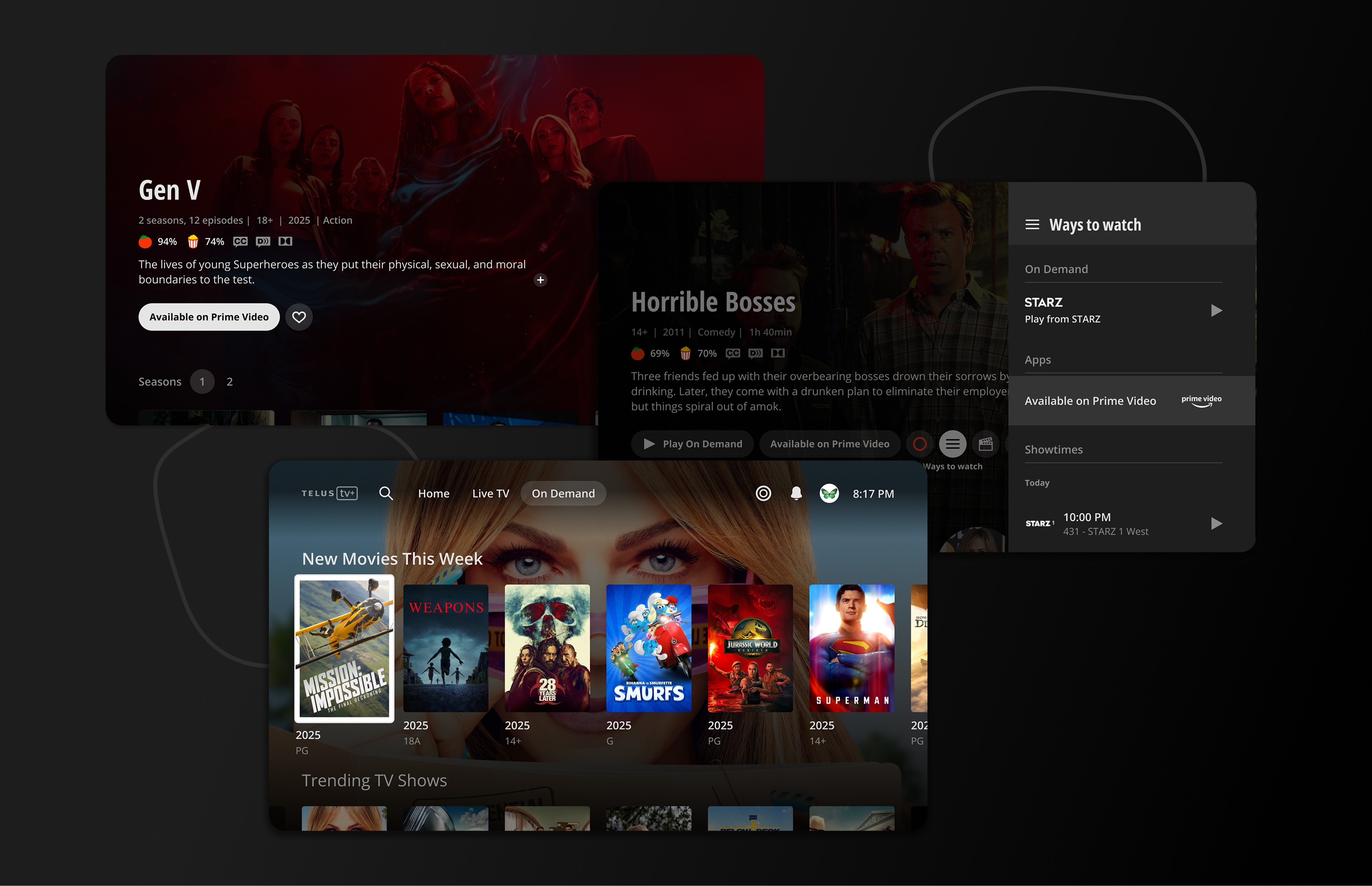
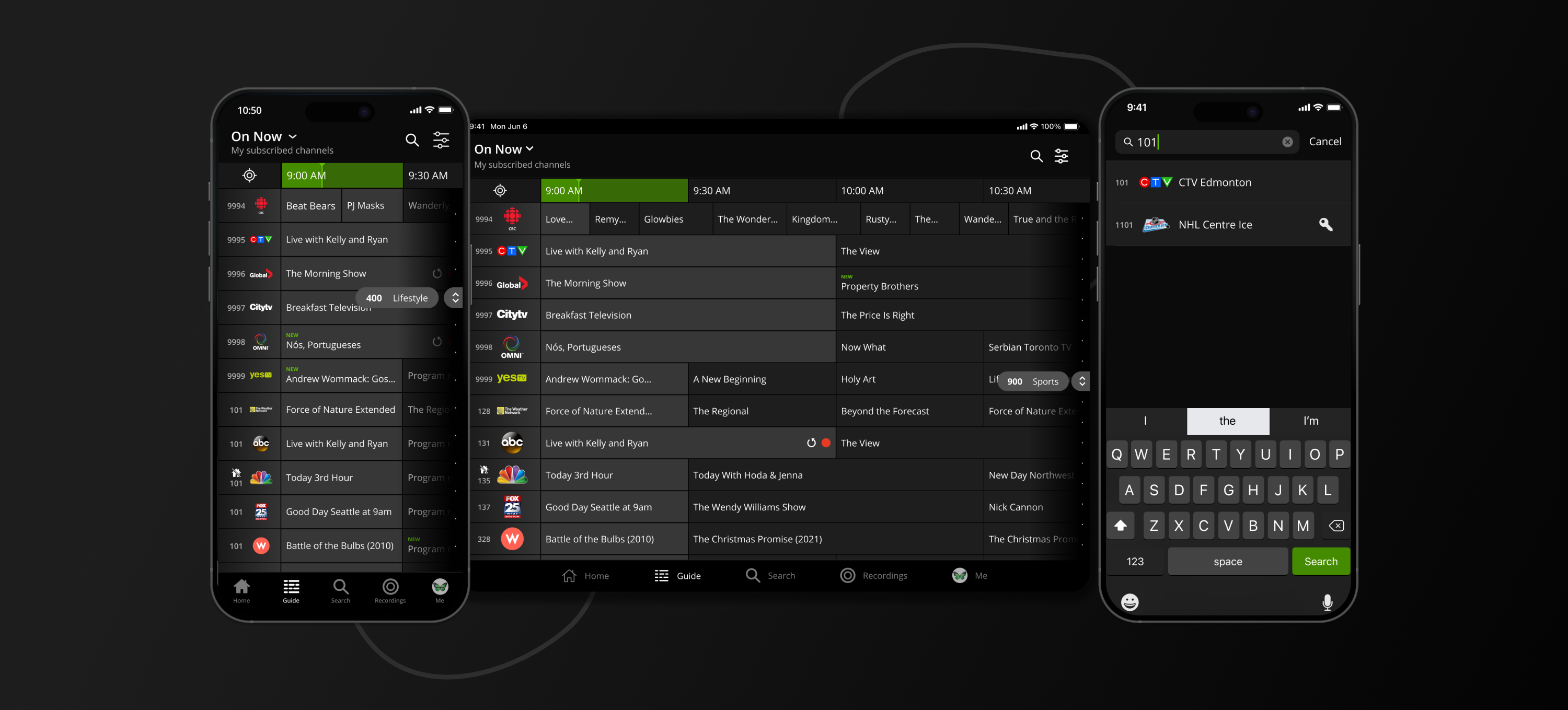
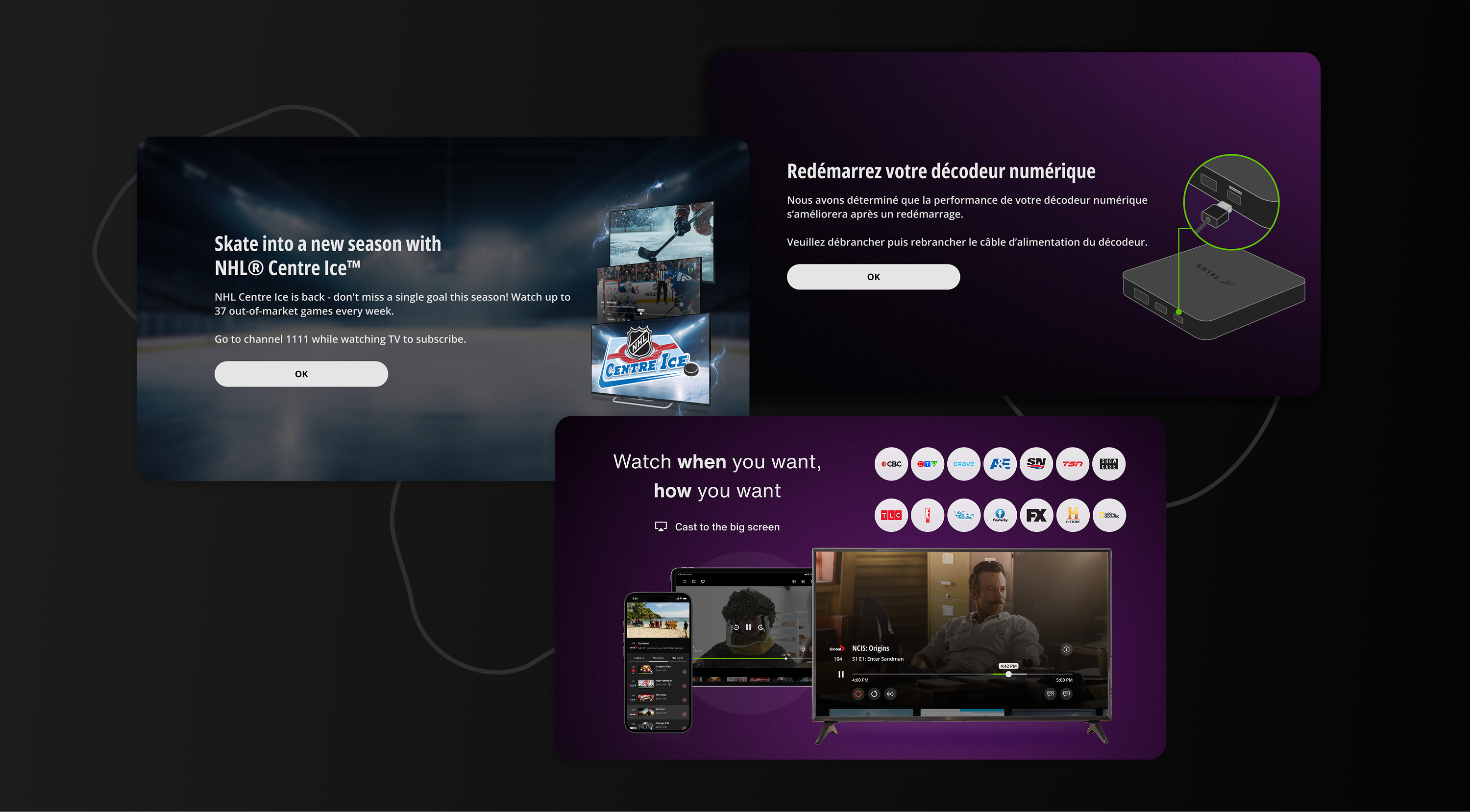
Additionally to the Teams Recording feature, I worked on multiple other features: I led the efforts in developing new ways to search for content in mobile devices; researched benchmarkings for multiple features; designed a "mini" version of the TelusTV+ experience for a different device, specific for a remote region in Canada with minimal internet access; across many others.
As an additional challenge, during this project I had the opportunity to work with DesignOps as I served as a mentor and reference for all new designers that entered the project, distributing tasks and ensuring a healthy workload balance for the team.
Reflection.
Two things stuck with me from this project. First, that scaling design work means scaling decisions, not pixels — the design system, the documentation, and the patterns we set are doing far more work for the team than any single screen will. Second, that designing for non-tech-savvy users isn't about simplifying; it's about respecting decades of television muscle memory and layering modern affordances on top without disrupting it.